
Assessing river restoration using Extended Riverfly monitoring
Aug 2026 — Steve Brooks (Riverfly Partnership Co-Chair)
Extended Riverfly monitoring builds on the basic RMI system, which uses eight riverfly groups to check for pollution incidents, by adding a further 25 invertebrate groups. These 33 groups cover most of the major groups of river invertebrates you are likely to find. Extended Riverfly uses the same abundance classes as RMI but the scoring system differs in that it down-weights stress tolerant groups so that these do not score more highly as their abundance increases and some may even score negatively at high abundance. Extended Riverfly produces two metrics: a Water Quality Score (WQS), which gives an indication of biodiversity and impacts of organic pollution, and a Silt and Flow Score (SFS), which measures impacts of high siltation and/or low flows.
Extended Riverfly monitoring can be used in several circumstances to enhance basic RMI, including seasonal, annual or longitudinal surveys, or above and below outfalls. It is also useful when assessing the results of river restorations.
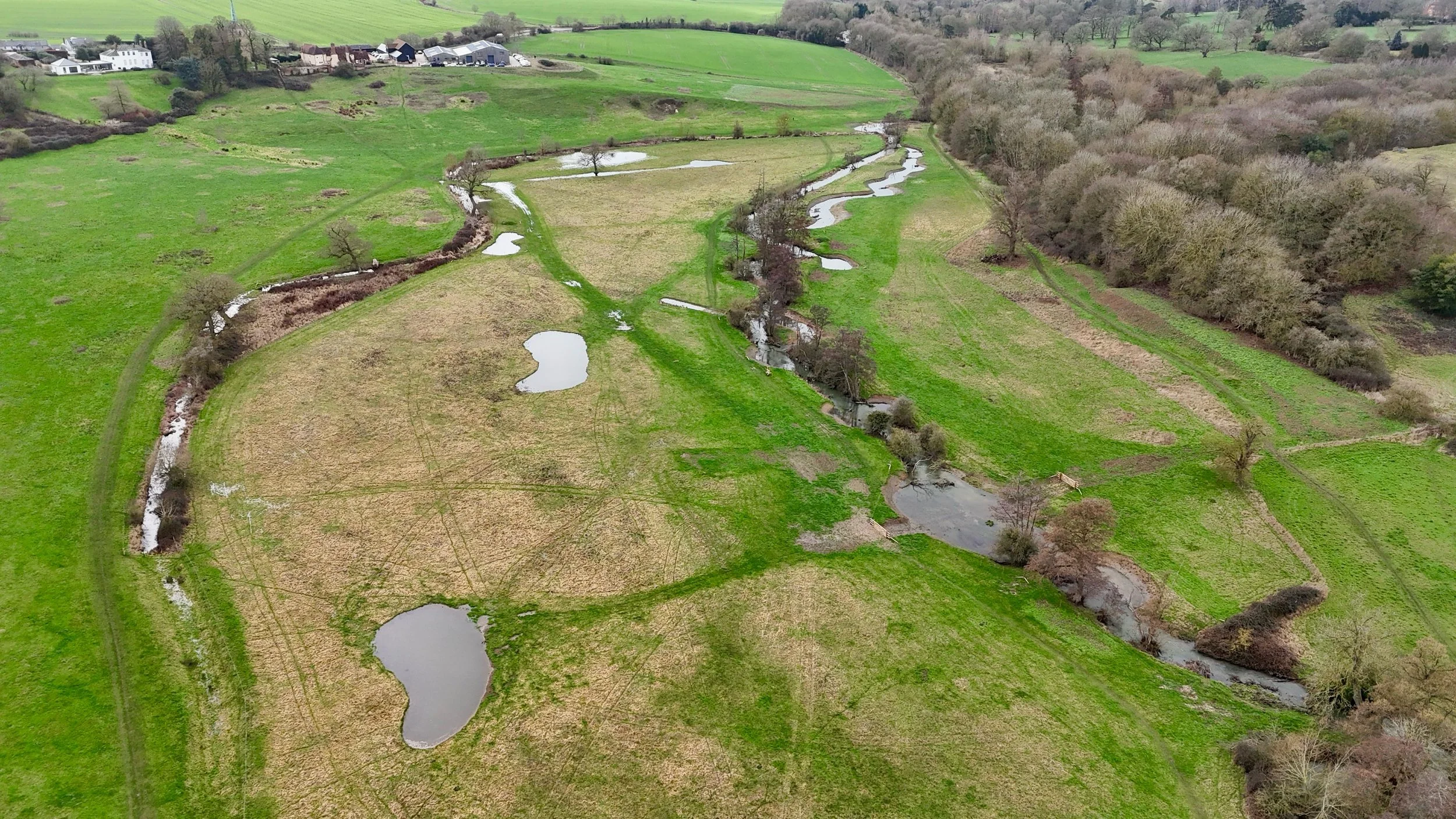
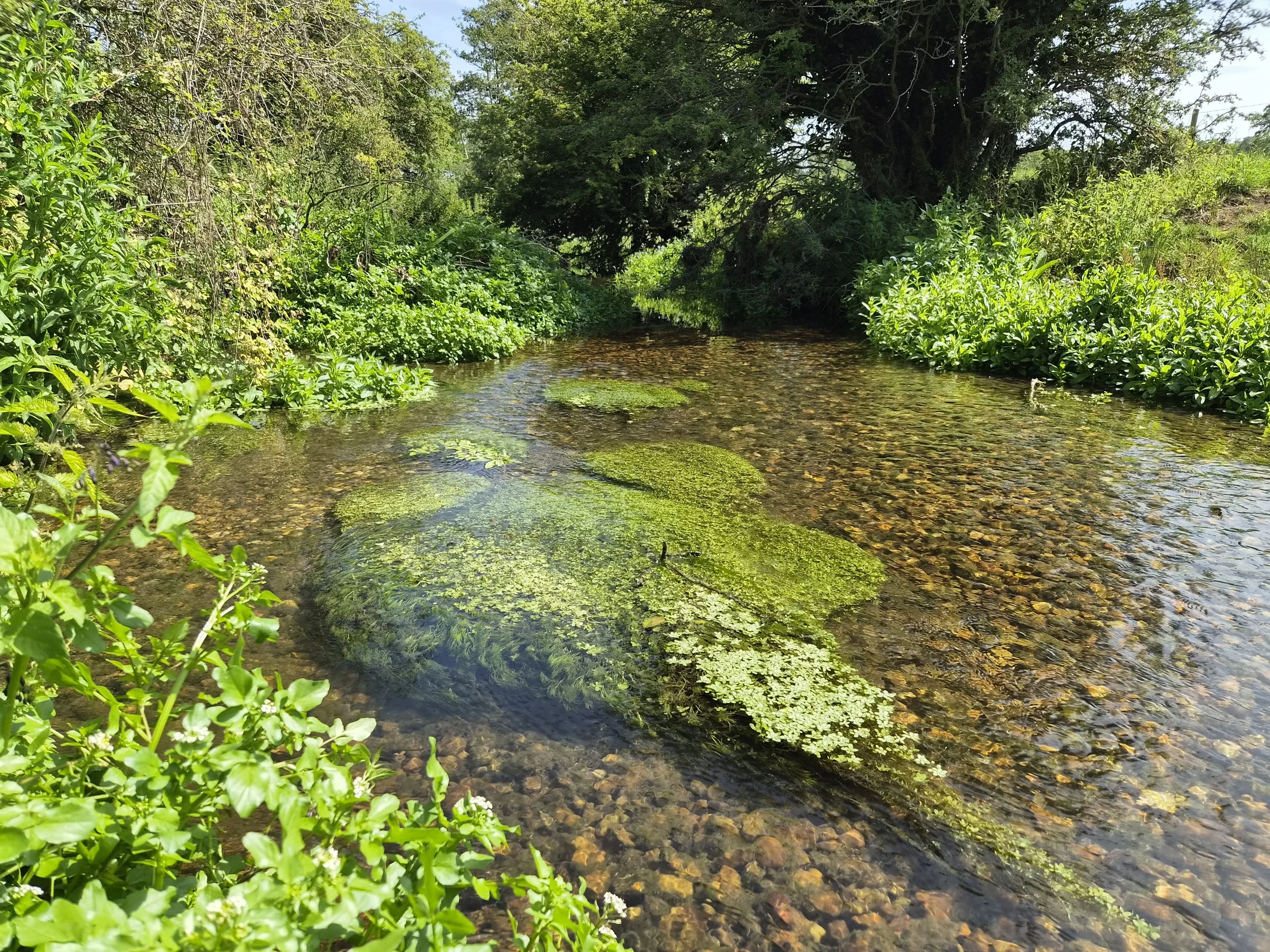
The River Ash is a chalk stream situated in east Hertfordshire. Historic management has resulted in an over-deepened and straightened river channel separated from its floodplain. In the last few years, where the river flows through the Easneye Estate, substantial sections of the river have been restored so it more closely resembles its natural state (see top left photo). Restoration has included adding gravels (see top right photo) and berms to make the river channel narrower and shallower, making the banks less steep to increase areas of marginal vegetation and allow the river access to the flood-plain, and re-meandering and re-opening the old river channel in some sections. This work has been made possible by Herts & Middlesex Wildlife Trust as project manager, the supportive landholder of the Easneye Estate, and funders DEFRA and the Environment Agency. These extensive works were recognized this year when they were the prize winner of the River Restoration Centre Project/Reach-scale Award. Extended Riverfly monitoring is on-going on the River Ash to assess the results of these restorations.
During Autumn 2025, in the most up-stream section of the restorations at Widford, the old river channel was re-opened, sections that had been historically over-deepened were reconnected to the flood-plain, and gravels were added to the river-bed to create new riffles. In April 2026, I surveyed one of these new riffle sections using Extended Riverfly. The results are shown below (Table 1).
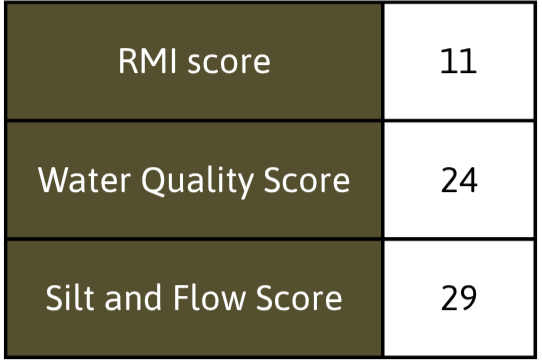
Table 1
The RMI score is relatively high, reflecting the high abundance of five of the eight RMI groups and this score is typical for other good quality sites on the river. It meets the Target Score of 11 and indicates that the river is in relatively good condition. However, both the WQS and the SFS are lower than other good quality sections of the river where scores are typically in the high 30s to low 40s. The reason for these low scores at the restored site is the low diversity of invertebrates in the sample. Only 19 of the 33 Extended Riverfly groups were present. The low diversity is almost certainly because many of the groups that might be expected to be present had not yet colonized the newly-restored channel during the winter months between the completion of the restoration works and the sample being taken. These results highlight how useful RMI, with its restricted but widespread groups, is for assessing general health of the river, whereas Extended Riverfly gives a more nuanced impression of the river biodiversity.
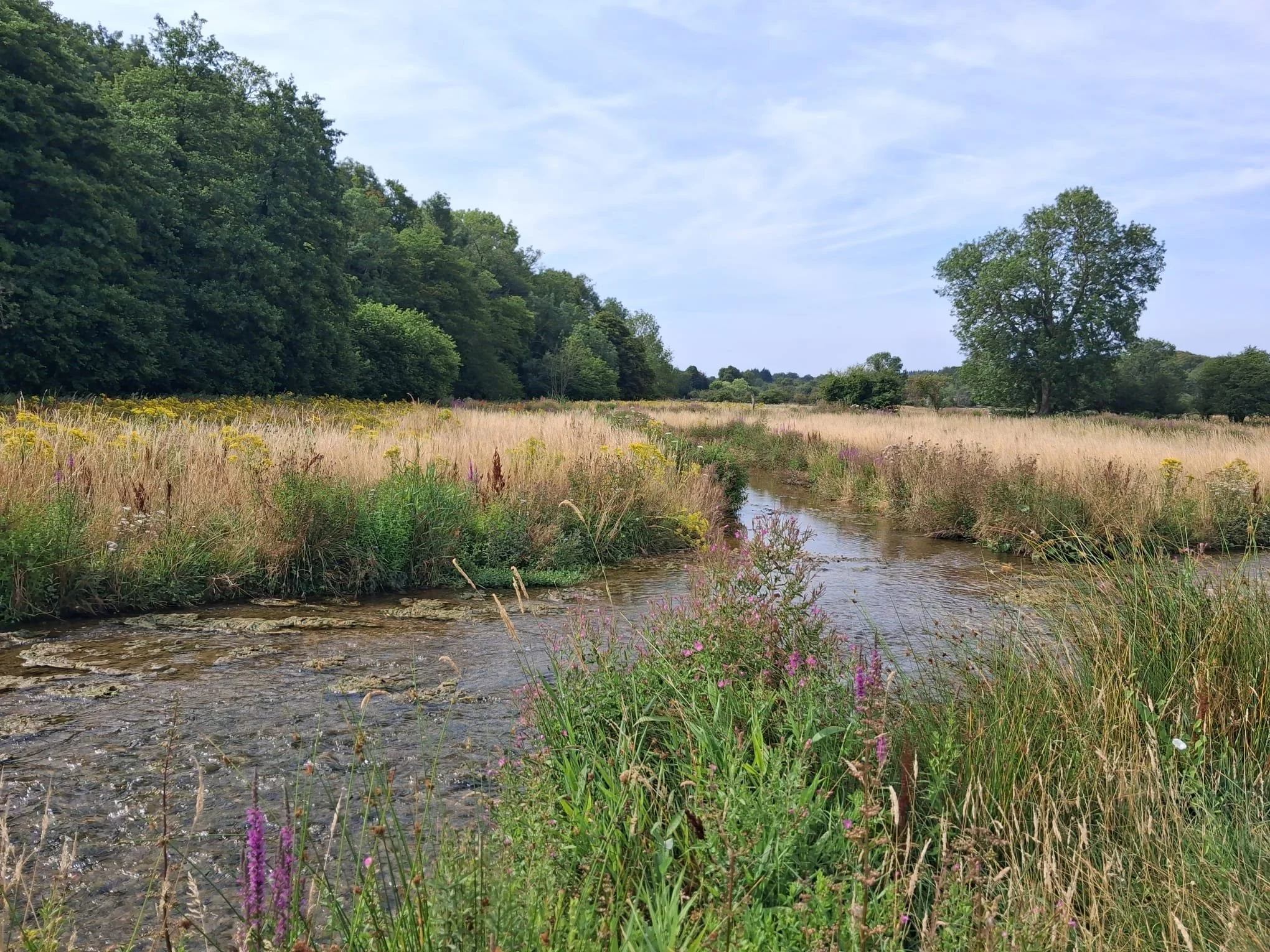
On the River Beane, a similar Hertfordshire chalk stream to the west of the River Ash, a new channel was created on the Woodhall Estate during 2024 (see photo above). The new channel was sampled by members of the River Beane Restoration Association in May 2025 and May 2026 and the results clearly show improving scores as the new channel is colonized by river invertebrates (Table 2). Interestingly, the 2026 RMI score of 18 exceeds the Target Score of 13.5 for this stretch of the river, suggesting that the river, following restoration, is now much better than average for a river of this type in the UK.
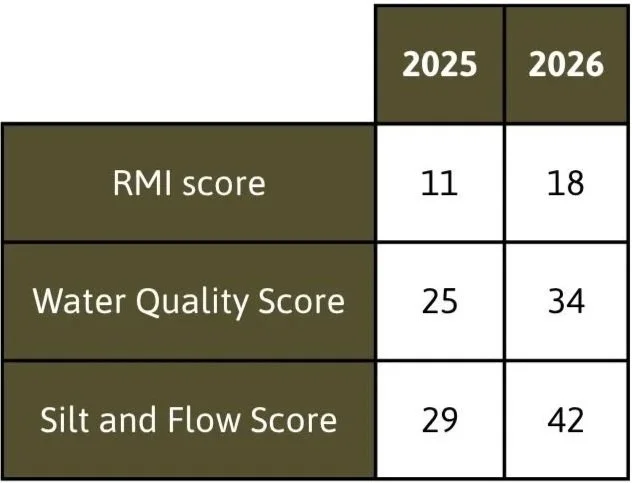
Table 2
It is to be hoped that similar trends will be seen in the coming years on the restored section of the Ash at Widford.
With thanks to Nicola Thompson (Herts & Middlesex Wildlife Trust) for sharing the results of the River Beane monitoring and the photo of the River Beane on the Woodhall Estate.
With thanks to Herts & Middlesex Wildlife Trust and the Easneye Estate for the photos of the River Ash.
Thank you to Steve Brooks for providing the above article.
If you are a monitor interested in getting trained in Extended Riverfly monitoring, please contact the co-ordinator of your Riverfly monitoring group. If there isn’t an Extended Riverfly tutor at your hub, contact info@riverflies.org and we will find you your nearest tutor.