
Summer Survey Guidance
There’s no denying that summer tends to be the season that an hour or two down by the river seems the most inviting. However, there are a few things to bear in mind during the summer months, particularly regarding invertebrate welfare and dealing with low water levels.
This page summarises some of the key things to know before heading out to do a survey in the warmer weather. This is general guidance from Riverfly Partnership’s national HQ – you might get more specific guidance from your local hub co-ordinator or regional ecology contact, in which case, follow that.
Minimising stress to invertebrates
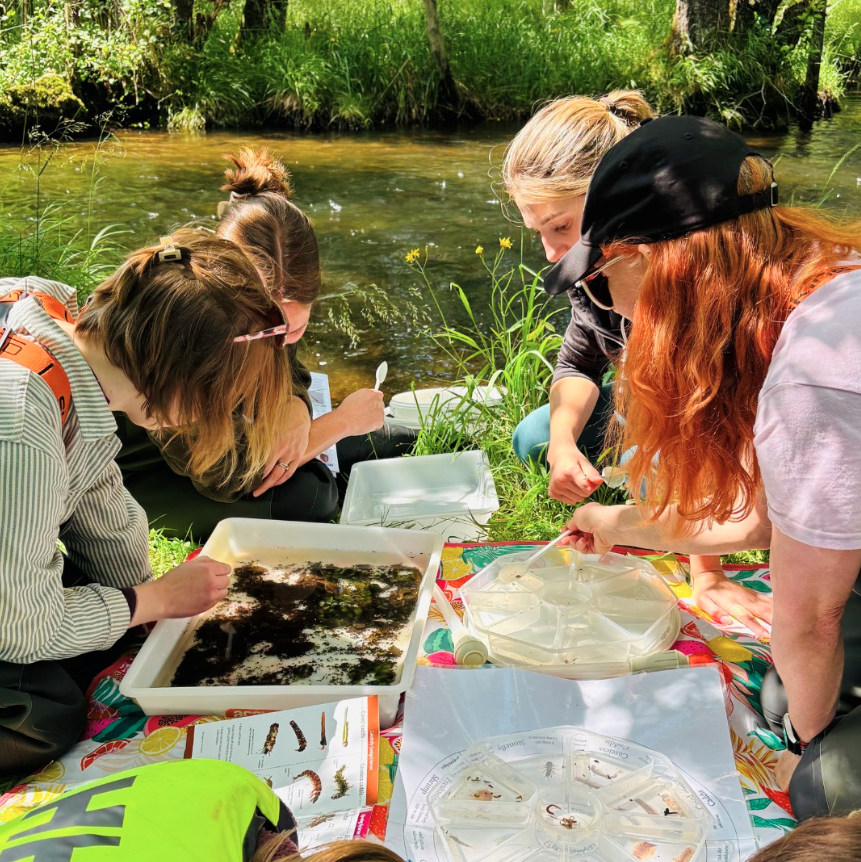
Remember that you are dealing with live animals, and on a hot, sunny day, they would much rather be in a cool, flowing stream than in a plastic tray while the water around them gradually warms up. We want to minimise stress caused to the invertebrates by high water temperatures and oxygen depletion. Here are some ways you can do this:
Set up your trays in a shaded area.
Try to be as quick as possible with sorting and counting.
You could keep a bucket full of river water in the shade near your sampling tray, and, as you do your sorting into the small 8-segment tray, keep a running tally and place those invertebrates to the bucket periodically. This will minimise the amount of time they spend in the shallow tray.
Keep an eye out for behaviours that indicate stress, e.g. stoneflies doing ‘press-ups’ to try to extract more oxygen from the water (as in this video), and flat-bodied stone-clingers overturning and becoming listless. These are signs that these insects need to be returned to the river.
When the water level is too low to sample
During periods of prolonged dry weather, you might see the water level drop at your site. We asked the EA ecology contact for East Anglia, John Findlay, for his perspective on how to decide whether or not it is still worth taking a sample:
“If the water levels are too low to get invertebrates into the net then there’s no point in sampling. This will be slightly individual between sites, but certainly if the water’s no deeper than the top of a substantial proportion of the stones throughout the wetted area, then invertebrates simply won’t be carried into the net. If most of the substrate is gravel/pebble, this would mean the tops of the pebbles and possibly some of the gravel being exposed, not just the odd exposed boulder/cobble. This isn’t the same as flow velocities being very low but water depth being sufficient, in which case it’s still likely to be appropriate to sample at most sites, but with the net held very close to where you’re kicking. If it isn’t possible to sample, please take at least one photo and write in the notes to explain why it wasn’t possible.
“In my area, I would encourage volunteers to continue sampling until either:
They get a confirmed trigger breach attributable to low flows, after which we might agree that they’ll continue to monitor as normal or reduce the frequency of monitoring until levels increase depending upon the site and volunteers.
The water becomes too shallow to sample effectively or dries up completely, in which case sampling will, by necessity, have to stop until it increases.
“In either case I would encourage volunteers to let me know that this has happened as it’s evidence of a lack of flow and potentially drought impacts. It’s also really valuable for volunteers to continue to visit their sites monthly and take photos, even if they don’t/can’t sample every month, as this can provide important evidence of drought impacts.”
This guidance may vary by region – contact your local coordinator/ecology contact about any low flow or drought issues with your river.
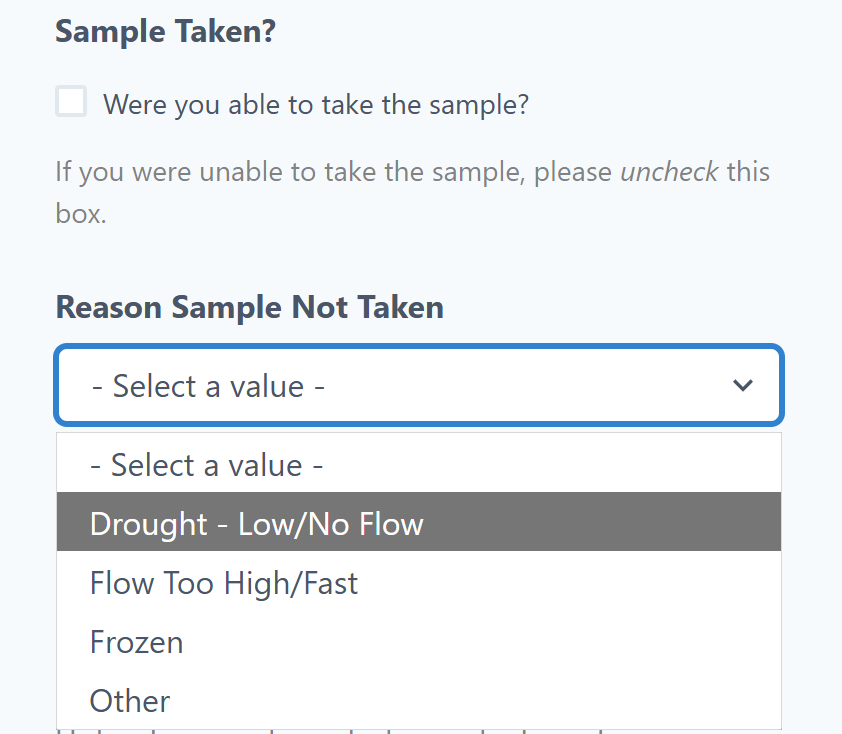
A key thing to note is: if you are unable to carry out a kick sample, you should still submit a ‘survey’ to the database to show this. Just un-tick the ‘Sample Taken?’ box and select the reason from the drop-down menu (as shown in the help guide here).
Risks during the summer
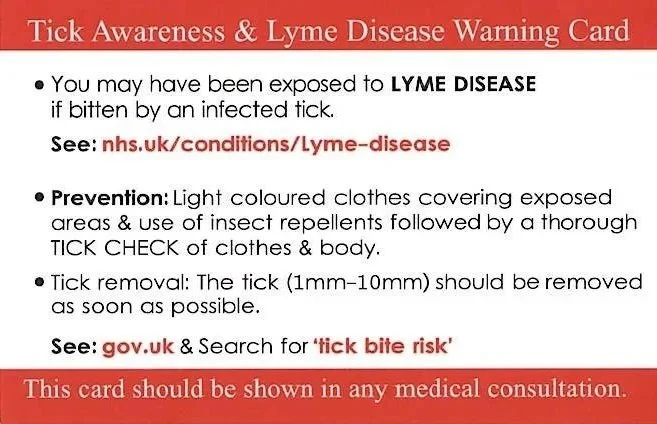
Make sure you are familiar with the contents of your training pack. Your red ‘Tick Awareness & Lyme Disease Warning Card’ is particularly important during the spring and summer months, when ticks are more prevalent. For full information about Lyme disease, see the NHS guidance here.
Giant hogweed is another species to look out for in the summer. It is an invasive non-native plant that resembles cow parsley but grows to a much larger size. Giant hogweed is found along river banks, and its sap can cause serious skin damage. Familiarise yourself with what it looks like, so that you know to avoid contact if it is growing near your Riverfly site. For more guidance and photos, see these web pages from the Canal & River Trust and the Woodland Trust.
Follow the government’s guidance on staying safe in hot weather. For example, on particularly hot days, try to avoid doing your kick sample during the hottest part of the day, and protect yourself from the sun (remember that UV levels are stronger near/in water due to surface reflections).
How riverfly numbers change with the seasons
We can’t provide detailed guidance on what happens to invertebrate communities in the summer on a national basis, as it will vary so much between sites and regions, but, very generally, here are some patterns you might see:
In early summer, you might find particularly large larvae, as spring and early summer are the peak times for many species to emerge from the river as adults. Any larvae that look particularly big are probably nearly ready to go – sometimes Riverfly monitors are even lucky enough to watch them emerge from their sampling tray!
Invertebrate numbers and diversity recorded in bankside assessments at a lot of sites are likely to be lowest in the late summer/early autumn, as, by this stage, most taxa with lifespans of one or more years will have emerged, and a lot of taxa will be either eggs or exceptionally small.
This effect will be compounded if water levels/flows get very low, as abundances often fall further in these circumstances.
This effect is often also more pronounced at sites that are less diverse in the first place (for instance at those that only have one of the three groups of cased caddisflies: those that are gill-less, those with gills on the underside or those with gills on the side).

