
Using RMI to Assess River Restoration in the Crane Catchment
ZSL - October 2026
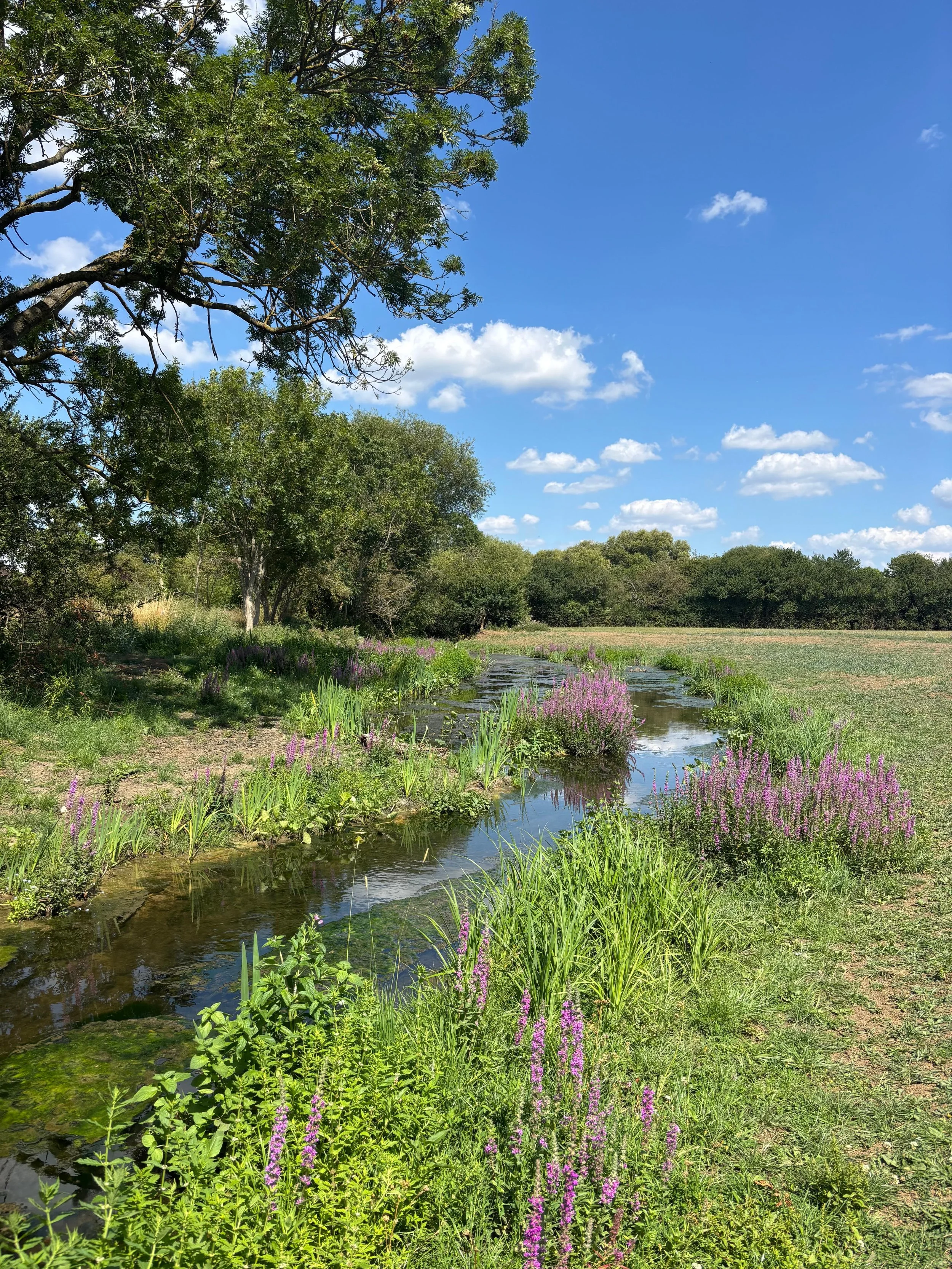
Spider Park post-restoration
Many thanks to Ella Carbery-Tarrant at ZSL for providing us with this piece on how Riverfly monitoring is being used in the Crane catchment:
The Zoological Society of London (ZSL), working alongside local partners and volunteers, is using the Riverfly Monitoring Initiative (RMI) to help assess the ecological benefits of river restoration projects across the River Crane catchment in west London. Through the Citizen Crane initiative, trained volunteers undertake monthly RMI surveys, providing valuable data on freshwater invertebrate communities and how they respond to changes in river habitat.
At Spider Park in Hillingdon, restoration works transformed a historically straightened and over-deepened section of the Yeading Brook West. Works included re-meandering the channel, introducing gravel and woody material and establishing marginal vegetation. RMI monitoring undertaken before and after restoration has shown encouraging results, with scores in the restoration zone increasing from 2 before the works to as high as 6 afterwards, alongside the appearance of olive mayflies and caseless caddisflies. In comparison, scores at an upstream control site have remained relatively low and stable, suggesting a positive ecological response to the restoration.
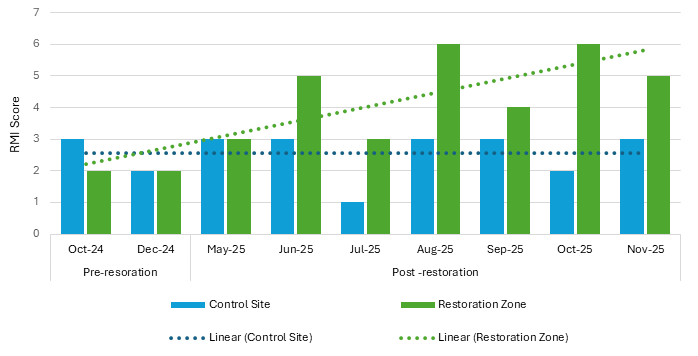
Spider Park RMI results
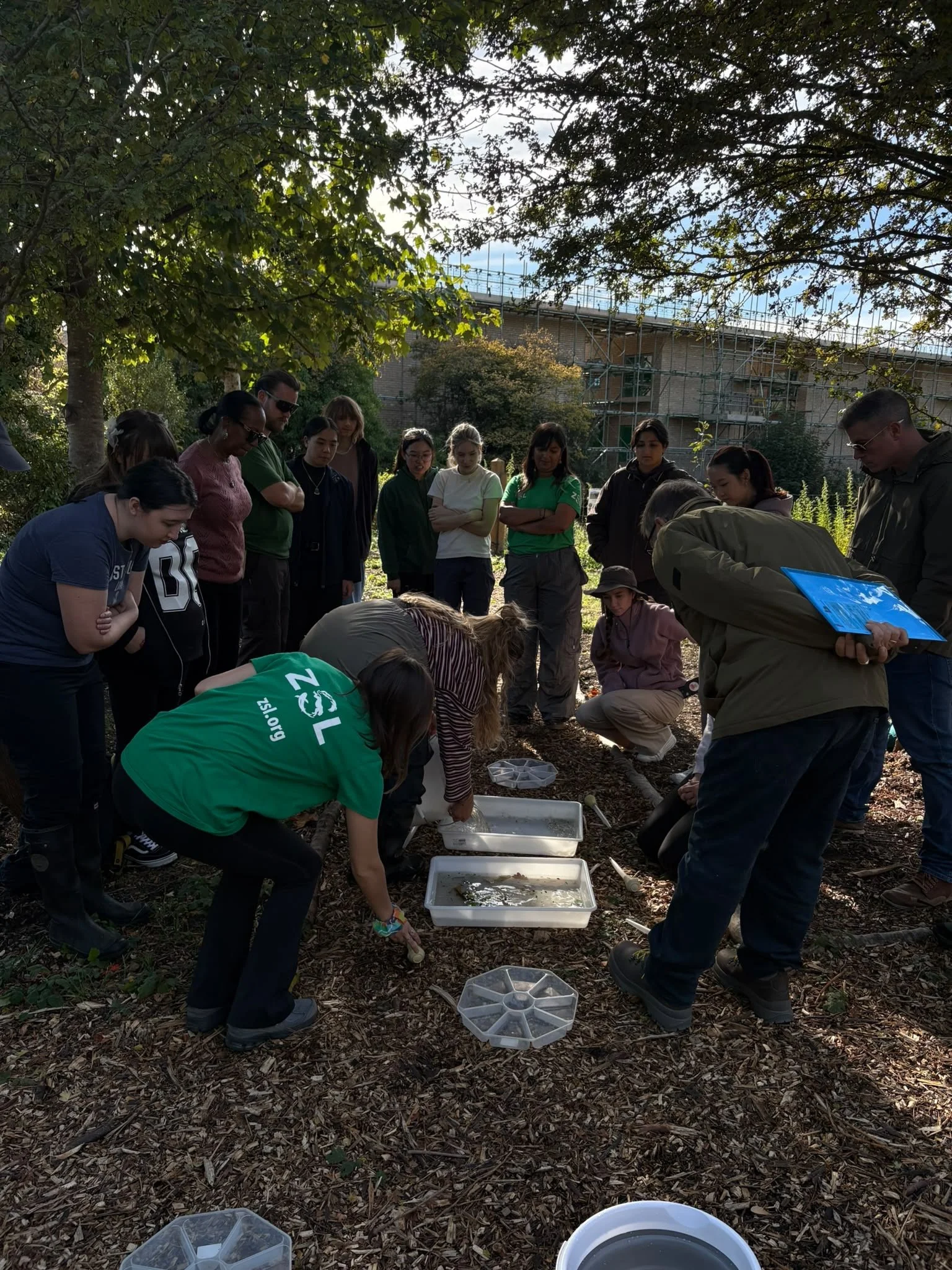
RMI training event at Mereway
Similarly, at Mereway Nature Park in Twickenham, restoration works completed in October 2025 involved removing concrete bank reinforcement, creating a backwater habitat and introducing gravel, vegetated berms and marginal planting. Early RMI monitoring has recorded encouraging improvements, with scores rising from 1 before restoration to a peak of 8 in October 2026, indicating an increase in the abundance and variety of freshwater invertebrate groups. Although pre-restoration sampling was limited by unsuitable habitat conditions, these early findings suggest a positive ecological response as the restored habitats begin to establish.
Both projects demonstrate the value of RMI as an accessible, volunteer-led approach to monitoring ecological responses to river restoration. Working alongside Cartographer, ZSL is also bringing together RMI and MoRPh CSci hydromorphological surveys through collaborative monitoring blitz days, combining biological and physical habitat assessments to build a more comprehensive picture of restoration outcomes. Alongside fixed-point photography and potentially water quality monitoring in the future, these approaches will help track how restored habitats develop over time and strengthen the evidence base for future river restoration projects across the catchment. By empowering local volunteers to collect consistent, long-term ecological data, the RMI provides an accessible and practical way to assess restoration outcomes while strengthening community involvement in the stewardship of local rivers.
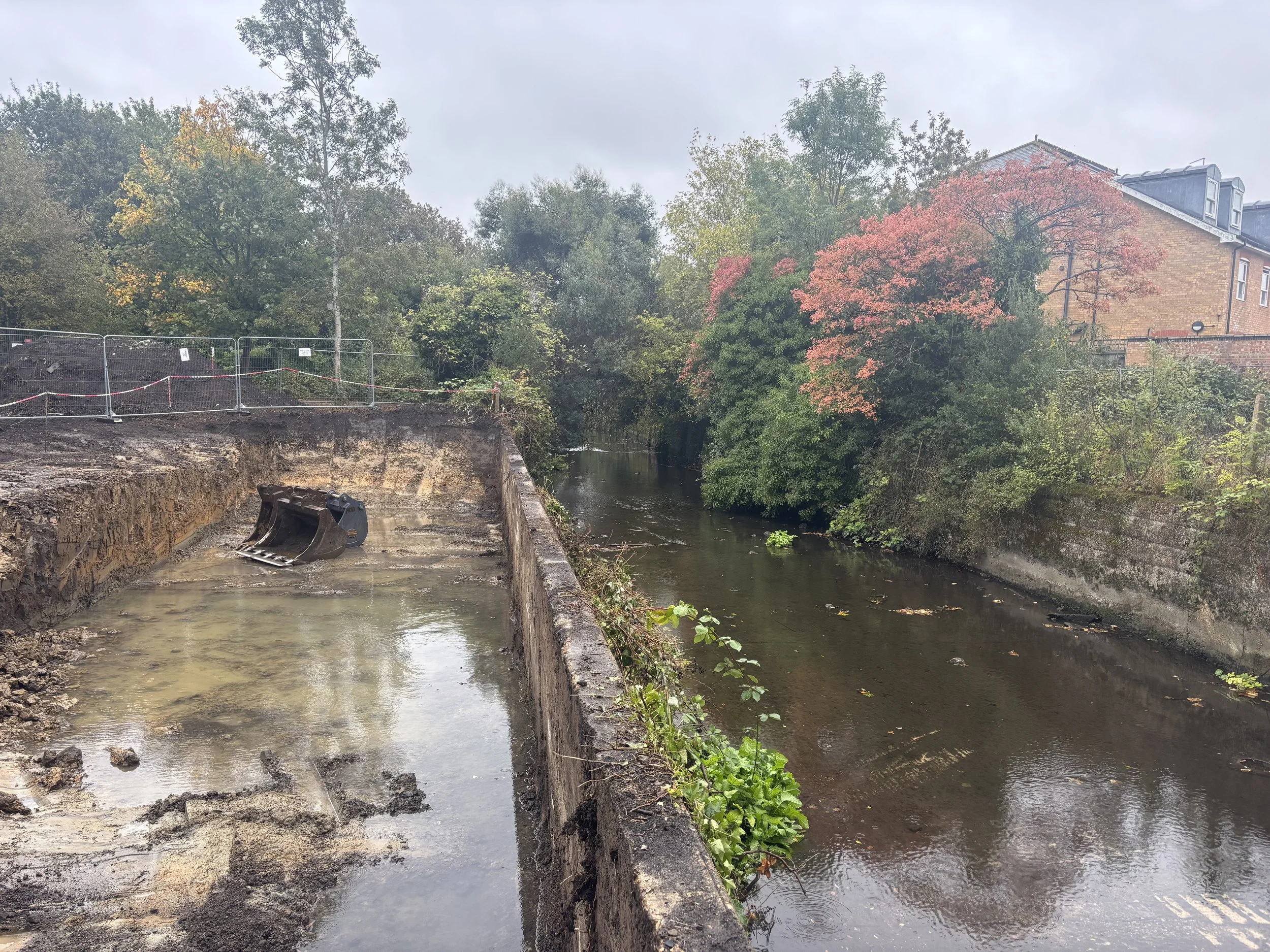
Mereway, pre-restoration, October 2025
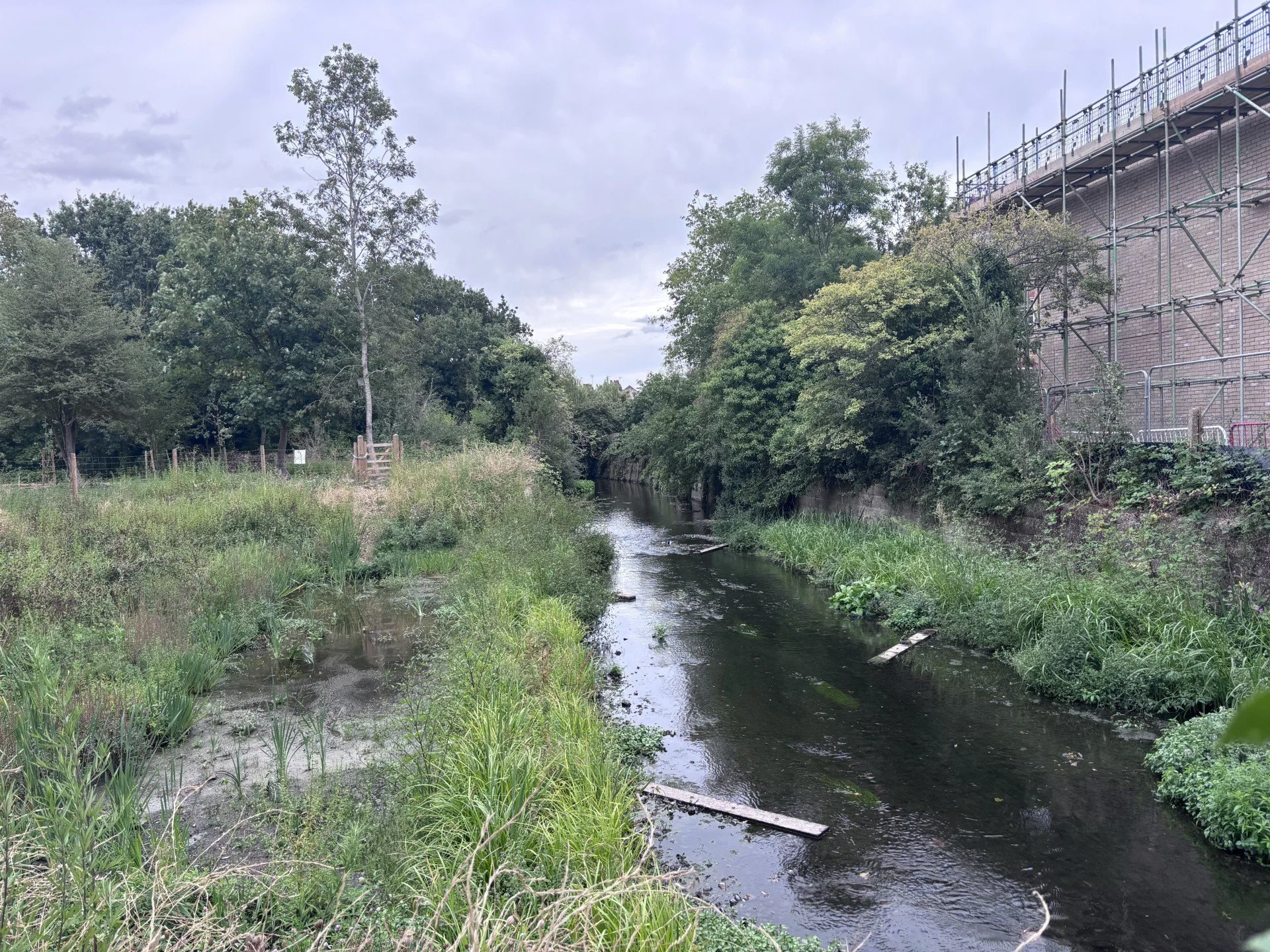
Mereway, post-restoration, August 2026