
Modelled Targets and Triggers
Where to find Modelled Targets and Triggers
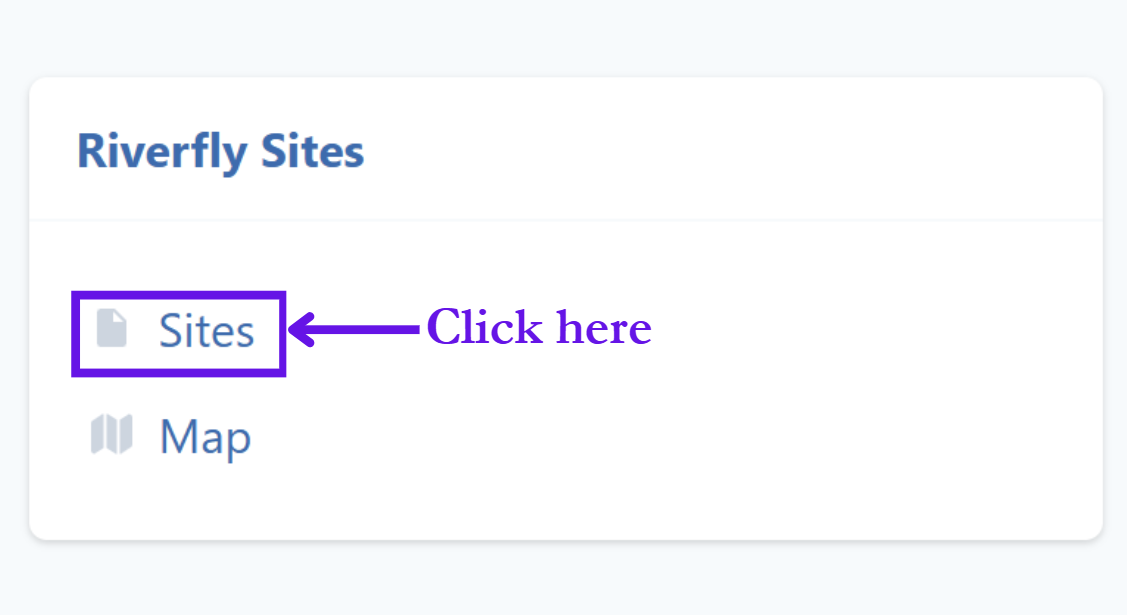
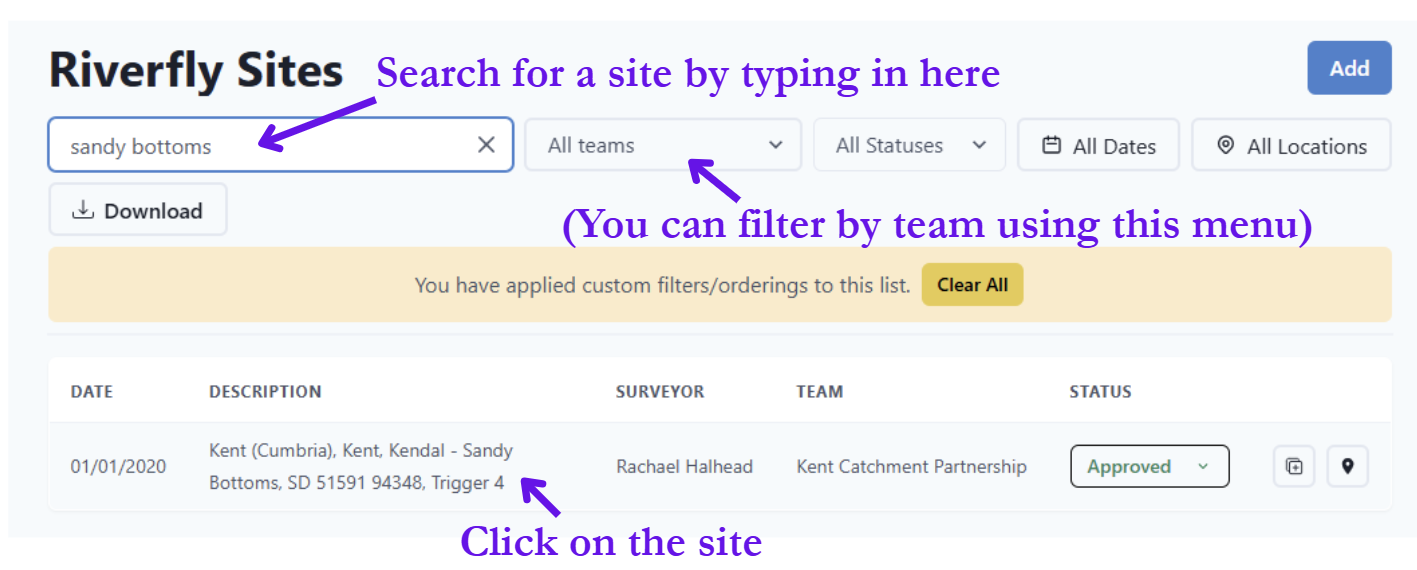
Anyone can see the Modelled Target Score and Modelled Trigger Level for any site already registered. On your home page, click on ‘Sites’ under ‘Riverfly Sites’ (if you don’t have a database account, you can sign up for one here). You can then search for the site you are interested in, and click on the listing.
Riverfly sites in England and Wales now have two automatically generated values: the Modelled Trigger Level and the Modelled Target Score. This page explains how these are produced, and how they can be interpreted.
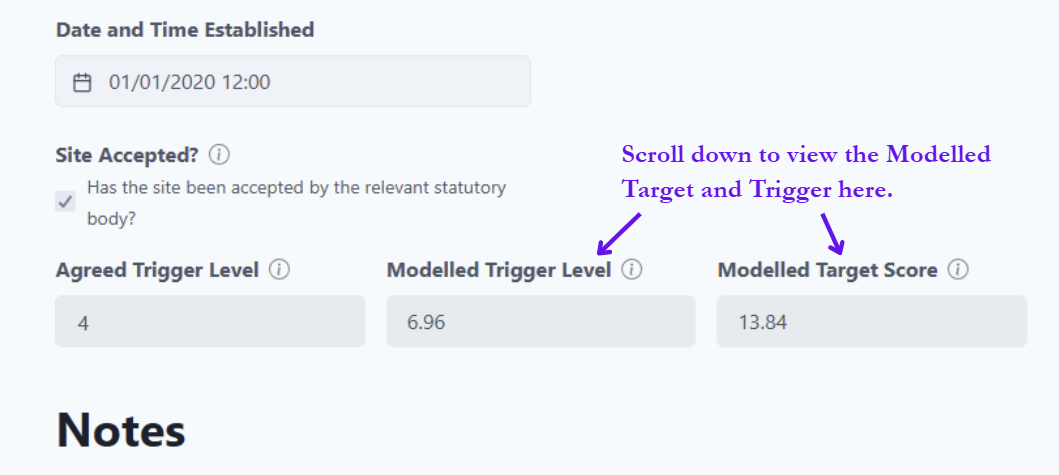
If you are a co-ordinator, you will see the Modelled Trigger Level and Modelled Target Score appear here automatically when you assign a location to a new site.
What these values mean
Modelled Trigger Level
The Modelled Trigger Level is approximately half of the Modelled Target Score, and is automatically generated when a site’s location is assigned. This is not the same as the Agreed Trigger Level, which the co-ordinator manually enters when it is set by the regional ecology contact at the statutory body.
The Modelled Trigger Level can be used for guidance, putting survey scores into context when a site hasn’t yet had an Agreed Trigger Level assigned, but the ecology contact is under no obligation to investigate when a survey’s score falls below it.
Modelled Target Score
This is an indication of what the RMI score might be expected to be if the stream or river was in pristine, or near-pristine, condition. Modelled Target Scores vary considerably between sites. This is because different watercourses have different physicochemical properties, and therefore different ecological potentials. For example, a Modelled Target for a swiftly-flowing upland stream will typically be higher than of a slow-flowing lowland river.
The Modelled Target Score is a site-specific score to strive towards. It gives an idea of what the RMI score should be, if it was free from human influences.
If a site is in particularly good condition, it is possible to exceed the Modelled Target Score.
How these values are generated
The Modelled Targets and Triggers are generated using the River Invertebrate Prediction and Classification System (RIVPACS). Specifically, RIVPACS Model 44 was used. This model predicts the expected composition of the freshwater invertebrate community at a site in the absence of significant anthropogenic stress. In other words, the RIVPACS model can tell you which riverflies, and in what quantities, you would expect to see at a particular site if it was free from the influences of humans, such as pollution. It bases this prediction on a series of geographic parameters, and the alkalinity of the stream. This predicted assemblage of invertebrates for a site can then be converted into an RMI score, and this is what we have called the Modelled Target Score.
Modelled Trigger Levels are 50.3% of the Modelled Target Score for a site. For example, a site with a Modelled Target of 13.10 will have a Modelled Trigger of 6.59. This figure of 50.3% was decided upon based on how the Water Framework Directive (WFD) Poor-Moderate Boundary Score is calculated – see table below.
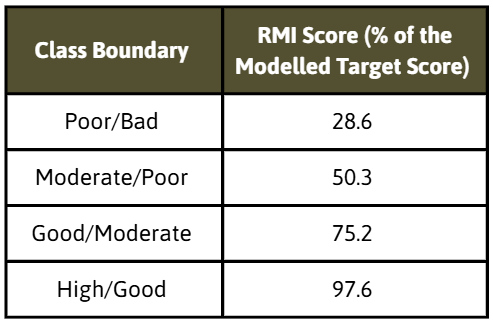
This table doesn’t show the actual WFD classification bands, but they are calculated using the same method as were used on RIVPACS Model 1 for the WFD, and then mapped over to Model 44.
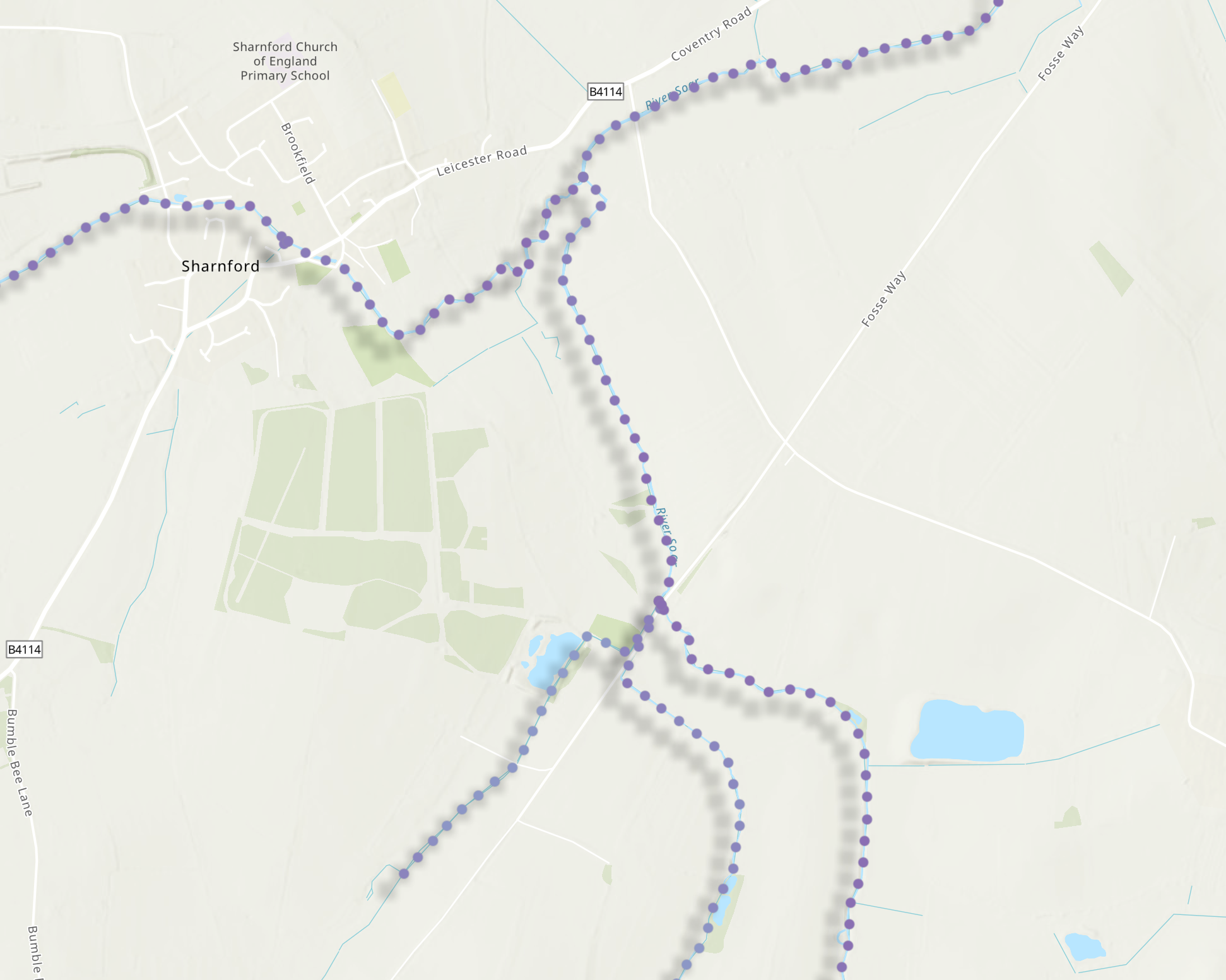
The model was run at a 50 metre resolution across the English and Welsh river networks, meaning there is a dot every 50 metres along every river, allocated with a specific set of values. In the Riverfly database, when a site is registered, it pulls the Modelled Target Score and Modelled Trigger Level from the dot nearest to the site’s location on this hidden layer.
Modelled Trigger vs Agreed Trigger
Ecology Contacts (ECs) at statutory bodies are under no obligation to follow up on surveys that get a score below the Modelled Trigger Level. It is only when a survey breaches the Agreed Trigger Level that the ecology contact should be notified.
Whilst these modelled scores can be used as guidance by the EC when setting the Agreed Trigger Level, the EC has the final say on establishing the Agreed Trigger, based on local monitoring priorities and local knowledge.The Modelled Trigger Level of your site might be quite a bit higher than the Agreed Trigger Level. There are a few possible reasons for this. If the site is known by the Statutory Agency to be affected by long-term, chronic pressures, then the EC may set a low trigger level to avoid repeated unhelpful breaches. This may be based on a review of RMI data over several months to a year.
It is also possible that the Agreed Trigger Level is too low. This may reflect improvement at the site, perhaps through river restorations, or it may be that the EC has set a low trigger level as an interim measure while long-term RMI data accumulates. In these cases, the Modelled Trigger Score might be more useful, and this can be discussed with the EC.
Important notes
RIVPACS assumes the entire cross-section of the river channel is being sampled. Therefore, for a sample’s RMI score to be correctly compared to these modelled scores, the monitor should have kicked at points all the way across the channel, from one bank to the other. If the river was too deep to cross all the way, a fully representative sample is not possible, so the modelled target and trigger are not applicable.
These values are currently only available for England and Wales because of the availability of the data required to generate the scores. We hope to expand this to Scotland and Northern Ireland if the relevant data can be obtained.
If no Modelled scores appear when you are setting up a site, check that you have located the pin in the correct place. The scores are drawn from the nearest point on our hidden map layer (which are every 50m along every river), but if the site co-ordinates are too far away from any of these points, no Modelled Trigger or Target will be generated.